

As photographers, one might naturally assume that our eyes provide the necessary input to our brains in order to compose our images. But what if that input originated from somewhere else? Perhaps it seems like a odd concept to think about. How else would we photograph? The camera and one’s vision seem inseparable. Isn’t losing one’s vision a photographer’s worst nightmare? Perhaps not so odd, but inspiring, when learning about photographs made by the blind. I became intrigued by a book recommended in Andy Illachinski’s post about a photography teacher’s project who did just that – taught a photography class to the visually impaired. I was naturally attracted to it because I often question myself the way something is supposed to look because I often end up with the question – “According to whom and what?” If you can imagine yourself stepping outside your own existence, your own experiences – how can it change the way any particular scene is represented?
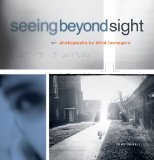
The book, appropriately named “Seeing Beyond Sight,” assembles photographs made by Tony Deifell‘s students from the Governor Morehead School for the Blind during his five year project. It describes the beginnings of the project, the skepticism of both the sighted and visually impaired towards it. The result is a shift in perceptions and interpretation of what a photograph is supposed to represent. Mr. Deifell admits his initial disappointment because he was evaluating the images based on his own experiences and teachings as a sighted photographer. The more he looked at the images, the deeper he was drawn in and learned about how his own vision had been shaped. He initially wasn’t seeing the way his students were.
“If I had found all the pictures from the project in my grandmother’s attic, I may have disregarded them.“
He describes a particular image of cracks in a sidewalk by one of his students. At first he was perplexed on how to interpret it, until given the explanation by the student. The pictures were sent with a letter to the school Superintendent stating “Since you are sighted, you may not notice these cracks. They are a big problem since my white cane gets stuck.” It seemed to be one of the switches for Deifell. Once he knew this hidden meaning, he began looking at all the images as puzzle pieces to a larger story.
I see parallels in this revelation to our own judgement of images, even of the photographs made by the sighted. There is a reason why that person snapped the shutter at that particular moment. Perhaps it is not always immediately clear to the viewer, but we should not be so quick to dismiss its value of containing a message or story. Scenes are always experienced with more than just our eyes, so in a sense, a viewer of a photograph is already at a disadvantage to understanding it.
Mr. Deifull states “Each new piece I notice, whispers, in a still, small voice – pay attention to the cracks…” That is something for all of us to remember – because at some time or another, we all can be just as blind to the details before us.


Thank you for the comments.
@ Carl – I know what ya mean – and perhaps I don’t think about the viewer’s interpretation of an image as much as I just shoot and hope they understand what I saw! 🙂
@ Wren – part of the side effects of being a photographer I suppose, but it is even more exhilarating when you can find integration of the two. A lot of those details are unnoticed by many.
@ Cindy, thank you for visiting, yes I can see how this would hit home with you. This book served as such a reminder that our eyes aren’t solely responsible for seeing.
hey buddy..it’s been much too long since I visited, and this really hits home for obvious reasons- since my vision has become compromised, I’ve found I’m still able to enjoy photography but on a completely different level- one that’s hard to explain. I like how you say “we should not be so quick to dismiss its value of containing a message or story. ” Any image that tells a story will always grab my eye quicker than a well executed composition that leaves me wondering ‘what did they intend to share with this image- what did they feel’. The best imagery to me has always been something that evokes some sort of emotion or attachment, rather than just a pretty picture.
A great post and I’ll definitely be looking for that book. I read a similiar one not long after my eye disease hit titled “he saw a hummingbird’. Great read about a man who lost most of his vision yet created some of the most phenomenal images of hummingbirds in his day. He studied them, grew to love them and by having that ‘attachment’ to them, was able to share a beautiful body of work.. Heady stuff.
(btw, the revolving tags on the sidebar are *really* trippy.. you find the coolest things) 😉
I’ve noticed that I see things differently, and in more detail, since I’ve been taking more photographs. In a way, you are detaching yourself from the experience to pay attention to light, proportion, composition, and other details. That’s neither bad nor good intrinsically, but it is different.
Mark: Like you were intrigued, I now am intrigued by your post. I’ll have to search the book out at my local B&N. The “seeing the cracks” thought reminds me of Bryan Peterson’s book, “Learning To See Creatively.” Bryan is one of my primary inspirations. In his book, he suggests exercises for the photographer using just one lens for a whole day (or outing); and shooting the same subject from several different perspectives. His point is that we often don’t see things that are right in front of our eyes. Taking this a step further, and thinking about “seeing” without even using our eyes–not THAT is a truly unique (and inspirational) approach.
I cannot get enough reminders of the truth contained in your post. Carl’s comment hits home with me, as well. Thanks, both of you, for stirring up my thinking.
Hey Mark,
Interesting thoughts. I’m still in the process of trying to step more deeply into my own experience rather than concern myself with how someone else may experience a particular subject. The question is how do I try to make a photo that captures, best I can, the experience that I’m having. If I ever do that, I’ll then start asking the question of how someone else may experience it.
Cheers
Carl